Temp Mail vs Regular Email: Which One Should You Use?
Have you ever used your real email address to sign up for one small thing, and then suddenly your inbox starts filling up with newsletters, offers, reminders, and random promotions you never wanted?
It happens all the time.
Maybe you downloaded a free PDF. Maybe you joined a free trial. Maybe you just wanted to check a website once. But after that, your personal inbox becomes a target for marketing emails.
That is where temporary email can be useful.
A regular email address is important. You need it for work, banking, school, personal communication, and accounts you care about. But not every website deserves your real email address. Sometimes, using a temp mail service is the smarter choice.
In this guide, we will compare temp mail vs regular email in a simple way, so you know when to use each one.
What Is a Temporary Email?
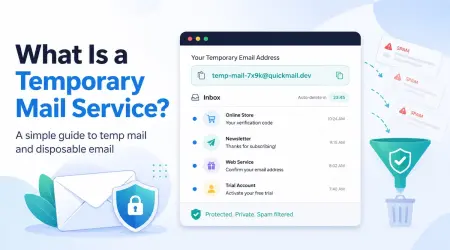
A temporary email, also called temp mail, disposable email, or temporary mail, is an email address you can use for a short time.
You do not need to create an account.
You do not need to enter your name.
You do not need to use your phone number.
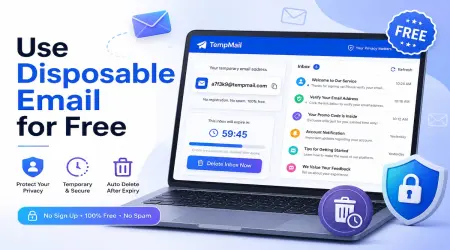
You simply get an instant email inbox and use it when needed.
Most people use a temporary email address for things like:
- Free trial signups
- Website verification
- Downloading free files
- Testing apps or websites
- Avoiding spam
- Protecting personal privacy
After some time, the temporary email address expires or becomes inactive. That means you do not have to worry about receiving future spam in your main inbox.
What Is a Regular Email?
A regular email is your permanent email account. This could be Gmail, Outlook, Yahoo Mail, iCloud Mail, or a business email using your own domain.
Unlike temp mail, a regular email is designed for long-term use. You use it to send and receive important messages. It is connected to your identity, your contacts, your accounts, and sometimes even your financial services.
A regular email is best for:
- Work communication
- Online banking
- Shopping accounts
- Social media
- Family and friends
- School or university
- Business communication
- Long-term subscriptions
In simple words, your regular email is your main digital address. You should protect it carefully.
Temp Mail vs Regular Email: Main Differences
Here is the easiest way to understand the difference.
| Feature | Temporary Email | Regular Email |
|---|---|---|
| Setup | Instant | Requires signup |
| Personal information | Not required | Usually required |
| Lifespan | Short-term | Permanent |
| Privacy | High | Medium |
| Best use | One-time use | Long-term use |
| Spam risk | Very low | Can increase over time |
| Password recovery | Not suitable | Suitable |
| Storage | Limited | Large storage |
| Professional use | No | Yes |
| Account security | Basic | Stronger |
The main difference is this:
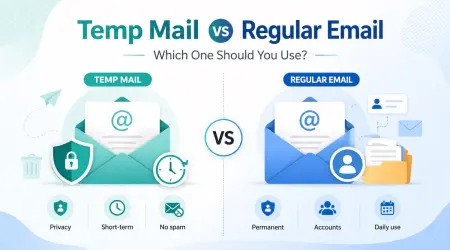
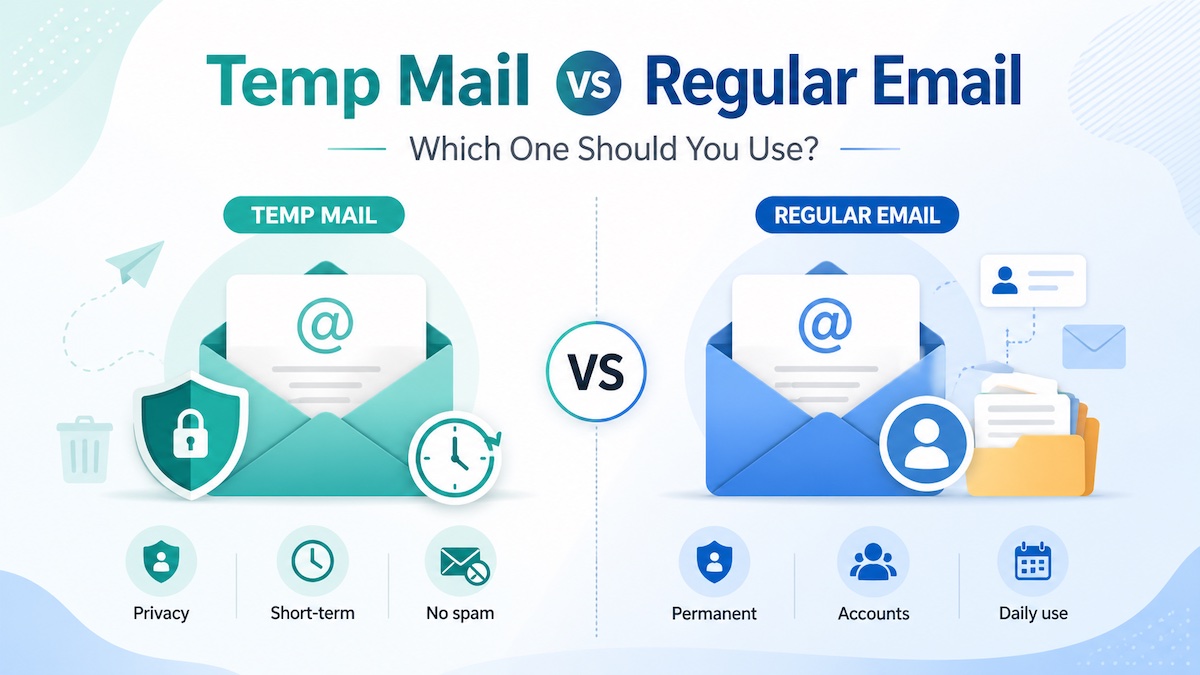
A regular email is made for trust and long-term communication. A temporary email is made for privacy and short-term use.
Both are useful. You just need to know when to use which one.
Is Temp Mail Safe to Use?
Yes, temp mail is safe when you use it for the right purpose.
It is helpful when you do not want to share your real email address with a website. For example, if you only need to receive a confirmation code or download a file, a disposable email can protect your real inbox.
But temp mail is not the right choice for every situation.
You should not use temporary email for:
- Bank accounts
- PayPal or payment services
- Social media accounts you care about
- Business accounts
- Government services
- School or work portals
- Anything that needs password recovery later
Why?
Because if you lose access to that temporary inbox, you may not be able to recover your account later. That can create serious problems.
So, temp mail is safe for short-term use, but it is not safe for important long-term accounts.
Is Regular Email More Secure?
Regular email services like Gmail, Outlook, and Yahoo usually offer stronger account security features. For example, you may get:
- Two-factor authentication
- Password recovery
- Login alerts
- Spam filters
- Device security checks
- Email storage
- Account recovery options
This makes regular email better for important accounts.
But there is another side.
Your regular email is also connected to your identity. When you use it everywhere online, more companies can collect it, store it, share it, or leak it during a data breach.
That is why many people receive spam even when they never directly signed up for certain emails. Their email address may have been shared, sold, scraped, or leaked.
So regular email may be stronger for account security, but temp mail can be better for privacy.
When Should You Use Temporary Email?
You should use a temporary email address when you need quick access but do not want long-term contact.
Here are some common examples.
1. Free Trials
Many websites ask for your email before giving you access to a free trial. Sometimes you only want to test the service once.
In that case, using your real email may not be necessary. A temp mail address can help you sign up without filling your inbox with future promotional emails.
2. Downloading Free Resources
Many websites offer free eBooks, templates, checklists, or reports. But before downloading, they ask for your email address.
If you do not want their newsletter, you can use a disposable email instead.
3. Website Verification
Some websites only need an email address to send a verification code. If the account is not important, temp mail is often enough.
4. Testing Websites or Apps
Developers, testers, and digital marketers often need multiple email addresses to test signup forms, email verification, user registration, or trial flows.
Using real email accounts for testing can become messy. A temp mail service makes this process faster and cleaner.
5. Avoiding Spam
This is one of the biggest reasons people use temporary email.
If a website looks suspicious or overly aggressive with email collection, you can use temp mail instead of exposing your real address.
When Should You Use Regular Email?
Regular email is still very important. You should use it when the account matters.
1. Work and Business
Never use temp mail for professional communication. Clients, employers, coworkers, and business partners need a stable way to contact you.
For business, a regular email or custom domain email is the right choice.
2. Banking and Finance
Always use a permanent email for banking, payment apps, investment accounts, and financial services.
These accounts may send important alerts, statements, login warnings, and password reset links. You need long-term access.
3. Social Media Accounts
If you care about your Facebook, Instagram, LinkedIn, TikTok, X, or YouTube account, use a regular email.
If your account gets locked, your email may be the only way to recover it.
4. Online Shopping
For shopping websites you use often, regular email is better. You may need order confirmations, tracking numbers, refund messages, and customer support replies.
5. Personal Communication
Friends, family, school contacts, and important organizations should always have your real email address.
Temp mail is not made for personal relationships or ongoing communication.
Temp Mail vs Gmail: Which One Is Better?
This is a common question, but the answer depends on your goal.
Gmail is better for daily communication.
It gives you storage, search, security, recovery options, and integration with Google services.
Temp mail is better for short-term privacy.
It helps you receive emails without giving away your personal address.
So, temp mail and Gmail are not really enemies. They are useful for different jobs.
Think of it like this:
Your Gmail address is like your home address. You only give it to people or companies you trust.
A temporary email is like a short-term mailbox. You use it when you need to receive something quickly but do not want a long-term connection.
That is the smart way to look at it.
Privacy: Why Temporary Email Matters
Your email address is more personal than many people realize.
It can be connected to your name, location, accounts, purchases, subscriptions, and online activity. Once your email address is added to marketing lists, it can travel far beyond the original website where you entered it.
That is why using your real email everywhere is risky.
A temporary email gives you a privacy layer. It helps you avoid giving your personal contact details to every website you visit.
This is especially useful when:
- You do not fully trust the website
- You only need one-time access
- You do not want newsletters
- You want to avoid spam
- You want to protect your personal inbox
It is a small habit, but it can make a big difference over time.
Can You Use Temp Mail for Account Creation?
Yes, but only for low-risk accounts.
For example, you can use temp mail for:
- Testing a new website
- Joining a forum once
- Downloading a free file
- Checking a free tool
- Receiving a one-time verification email
But do not use temp mail for accounts you may need later.
The biggest problem with using temp mail for serious accounts is recovery. If you forget your password later, the website may send a reset link to the temporary email address. If that inbox is gone, you may lose the account.
So before using temp mail, ask yourself:
Will I need this account again later?
If the answer is yes, use your regular email.
Simple Rule: Which Email Should You Use?
Here is the easiest rule:
Use your regular email when the account is important.
Use temp mail when the website only needs your email for a short time.
Before entering your email anywhere, ask this question:
Do I want this website to contact me in the future?
If yes, use your real email.
If no, use a temporary email address.
This simple decision can help you avoid spam, protect your privacy, and keep your inbox clean.
Final Verdict: Temp Mail or Regular Email?
You should not completely replace your regular email with temp mail. That is not the right idea.
Instead, use both smartly.
Your regular email should be for important things: work, banking, family, business, shopping, school, and accounts you want to keep.
Your temporary email should be for quick signups, free downloads, testing, website verification, and situations where you do not want to share your real address.
When you use them this way, you get the best of both worlds.
- You keep your important email safe and organized.
- You reduce spam.
- You protect your privacy.
- You stay in control of who gets access to your real inbox.
Try a Temporary Email Address
Using a temporary email takes only a few seconds.
With TemporaryMailService.com, you can get an instant disposable email address without registration. Use it for quick signups, verification emails, free downloads, and spam protection.
No personal details.
No long forms.
No unwanted follow-up emails.
Your real inbox should be for things that matter. Let temp mail handle the rest.